A kinetic sculpture is not a machine, and it is not a clock. It is a work of art that moves — and in the hands of a designer who spent his life inside haute horlogerie, movement becomes a language of its own. For Jorg Hysek, the man who designed the Vacheron Constantin 222 and the Breguet Marine, the leap from the wristwatch to monumental mechanical sculpture was not a departure. It was a homecoming.
From the Wrist to the Room
Most people encounter mechanical precision at the scale of a watch — a few centimetres of metal on the wrist, its complexity hidden beneath a dial. Kinetic sculpture takes that same engineering and sets it free, at a scale that can fill a room and command a space. The mechanism is no longer concealed; it becomes the subject itself.
This is the territory Jorg Hysek has explored for decades in parallel to his watch design work. Trained first in micromechanics in Biel and later in sculpture in London, he has always moved between the two disciplines. As he explained in a recent interview with the collector publication The Exclusivist, his sculptural work and his horological work follow the same structural logic — engineered movement, controlled proportion, and a restraint from ornamental excess.
"Mathematical time set against what Hysek calls emotional time — the idea that only a captured moment, not the hour or minute, has any real meaning."
The Exclusivist, July 2026La Toupie: Time as a Spinning Top
The clearest expression of this philosophy is La Toupie — a kinetic sculpture in aluminium and steel whose name means "the spinning top." It is a meditation on the nature of time, built as an object of engineering and beauty in equal measure.
The full-scale version stands one metre tall and weighs 150 kilograms. It tells time through three rotating discs and is set via satellite — a detail that captures Hysek's sensibility perfectly: absolute mechanical precision, in the service of an idea rather than mere function. A smaller 400-millimetre edition, weighing 15 kilograms, adapts the same concept at a more intimate scale suited to a private collection or interior.
- Materials: aluminium and steel
- Full scale: one metre tall, 150 kilograms
- Tells time through three rotating discs, set via satellite
- Intimate edition: 400mm, 15 kilograms
- Concept: mathematical time versus emotional time — the captured moment

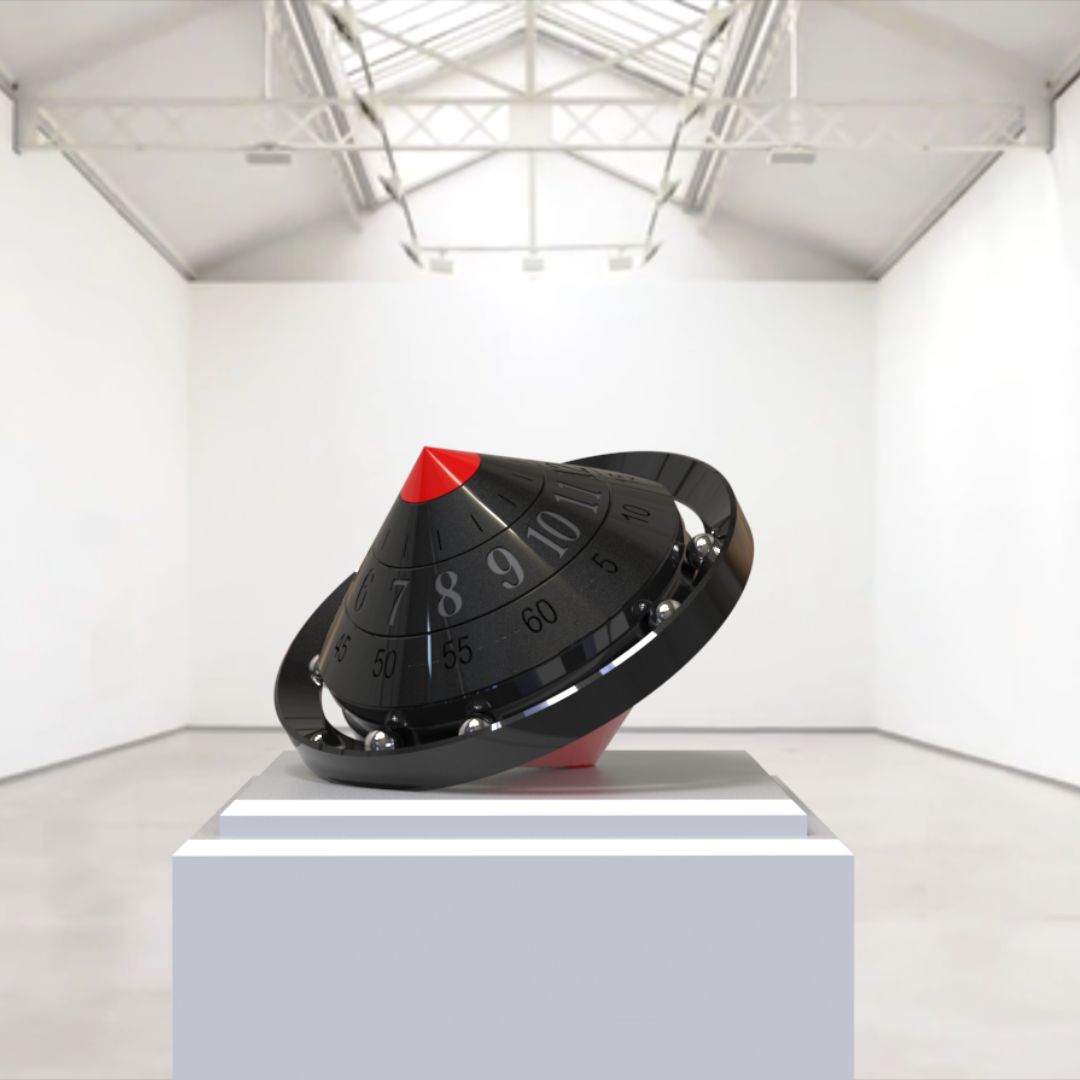
What makes La Toupie a sculpture rather than a clock is precisely this: it does not exist to tell you the hour. It exists to make you feel the passage of time — to hold, in a single spinning object, the tension between the measured and the felt.
The Colonne du Temps: A Column of Living Mechanism
Where La Toupie distils time into a single form, the Colonne du Temps — the Column of Time — extends the same kinetic vocabulary into a freestanding column sculpture. It is perhaps the most technically ambitious of Hysek's mechanical works, and it was developed in collaboration with the engineer Robert Bray.
The mechanism is extraordinary. A system of cams and carriages displays the hour and minute in large numeral segments, while a retrograde hand marks the seconds across an engraved cylinder. A single barrel and a 1.6-metre fusee-and-chain transmission — the same principle used in the most sophisticated antique marine chronometers — is wound entirely by hand and gives the sculpture an eight-day power reserve.
It is, in effect, a piece of monumental haute horlogerie liberated from the constraints of the wristwatch. Every principle Hysek mastered designing for Vacheron Constantin and Breguet is here, made visible, made architectural, made art.
- Developed with engineer Robert Bray
- Displays hours and minutes via cams and carriages in large numeral segments
- A retrograde hand marks the seconds on an engraved cylinder
- A 1.6-metre fusee-and-chain transmission, wound by hand
- Single barrel with an eight-day power reserve
- Produced in a range of finishes as individual editions
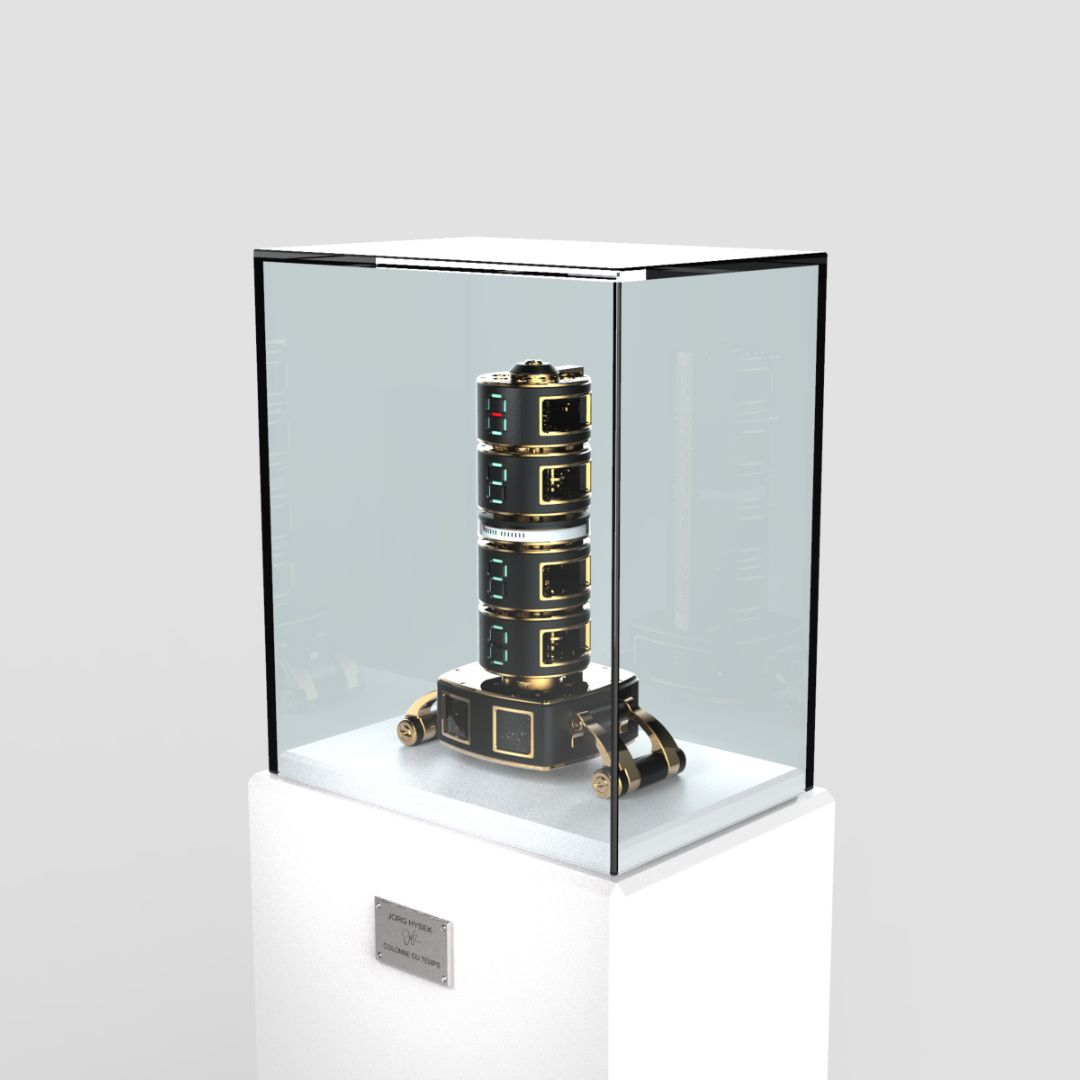
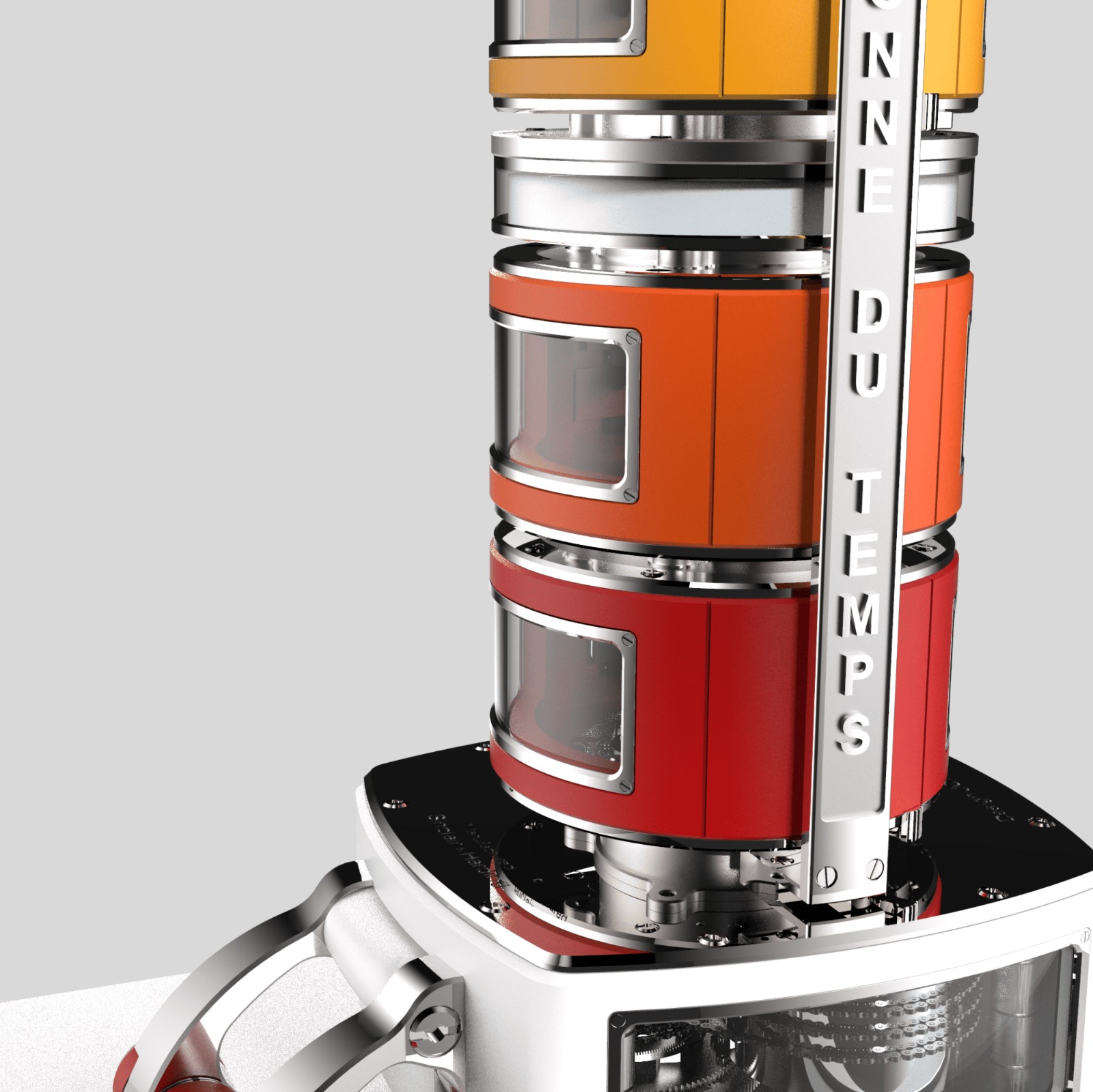
The Colonne du Temps is produced in a range of finishes, each a distinct edition — from the warm contrast of Golden Black to the depth of Bleu Mer. Each is a unique acquisition, a working sculpture that occupies a room the way a piece of fine furniture or a significant artwork does.
Why Kinetic Sculpture Belongs in a Serious Collection
Kinetic and mechanical art occupies a rare position in the collecting world. It sits at the intersection of three markets that rarely meet: fine art, haute horlogerie, and design. For the collector who already understands the value of mechanical craft — who appreciates a fusee-and-chain or a retrograde complication — a Hysek sculpture offers something a wristwatch cannot: presence, scale, and the visible drama of the mechanism at work.
And there is a provenance here that few living artists can offer. These are not sculptures made by someone imitating the language of watchmaking. They are made by one of the designers who defined that language in the twentieth century — the creator of watches now collected alongside the Royal Oak and the Nautilus. The hand that shaped the 222 shapes these works too.
Hysek's practice continues to evolve. In the same interview, he revealed that a new project — four years in the making — is due to be unveiled early next year. For collectors, the moment to engage with this body of work is while it is still being written.
Explore the complete collection of kinetic sculptures, mechanical art, and steel spheres available to acquire.
View Works Available- The Exclusivist — Jörg Hysek on Creative Freedom and the Future of Watchmaking (Q&A), July 2026 — theexclusivist.com